In Stock
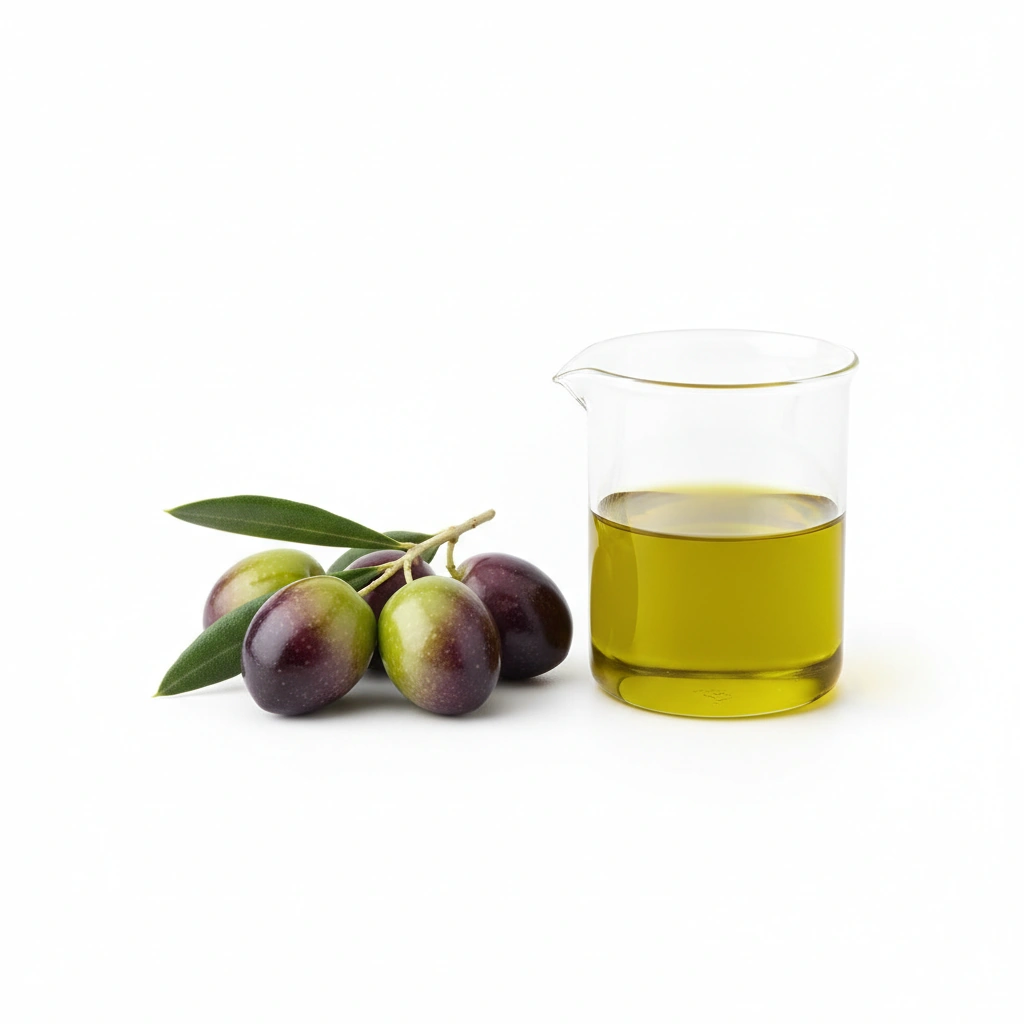
Product Image: For visualization purposes only. All ingredients are supplied as raw materials in bulk form. Available in Nutrient Ingredient form.
Extra Virgin Olive Oil (EVOO) is a cornerstone of the Mediterranean diet, revered for its rich content of monounsaturated fatty acids, particularly oleic acid, and powerful polyphenols like oleuropein and hydroxytyrosol. This cold-pressed oil supports cardiovascular health by maintaining healthy cholesterol levels, offers significant antioxidant protection, and possesses anti-inflammatory properties, making it an excellent functional ingredient for diverse health formulations.
Olive oil, particularly extra virgin olive oil (EVOO), is derived from the fruit of the olive tree (Olea europaea), a staple of Mediterranean agriculture for millennia. Its production involves crushing olives and extracting the oil, with EVOO being the highest quality, obtained through cold-pressing methods without chemical solvents, preserving its rich nutrient profile and distinctive flavor. This mechanical extraction ensures the retention of volatile aromatic compounds and heat-sensitive bioactive constituents. The unique composition of olive oil is primarily characterized by its high content of monounsaturated fatty acids (MUFAs), predominantly oleic acid, which typically constitutes 55-83% of its total fatty acid profile. Beyond its fatty acid composition, EVOO is distinguished by its significant minor component fraction, which includes a complex array of phenolic compounds, triterpenes, and squalene. These elements contribute not only to its sensory attributes, such as pungency and bitterness, but also to its extensive health-promoting properties, setting it apart from refined olive oils. The traditional use of olive oil dates back thousands of years, revered not just as a culinary ingredient but also for its perceived medicinal qualities in ancient civilizations.
The health benefits of olive oil are largely attributed to its synergistic blend of oleic acid and a rich spectrum of polyphenols, particularly oleuropein, hydroxytyrosol, and tyrosol. Oleic acid, a monounsaturated fat, has been extensively studied for its role in cardiovascular health, with research indicating its ability to help maintain healthy cholesterol levels by reducing low-density lipoprotein (LDL) cholesterol while potentially increasing high-density lipoprotein (HDL) cholesterol. A meta-analysis published in "The American Journal of Clinical Nutrition" highlighted the beneficial impact of MUFA-rich diets on lipid profiles. Furthermore, the phenolic compounds present in olive oil act as potent antioxidants, scavenging free radicals and reducing oxidative stress, a primary contributor to chronic diseases. Oleuropein, for instance, has demonstrated anti-inflammatory properties by modulating inflammatory pathways, as evidenced by studies in "Molecular Nutrition & Food Research." Hydroxytyrosol is another key compound, recognized for its exceptional antioxidant capacity and its contribution to endothelial function, which is vital for cardiovascular well-being. These compounds collectively contribute to olive oil’s protective effects against various physiological stressors.
In supplement formulations, olive oil is valued for its versatility and its ability to act as a lipid carrier for fat-soluble vitamins and other lipophilic compounds, enhancing their bioavailability. Its stability, particularly EVOO, makes it suitable for softgel capsules, liquid supplements, and even topical applications. Quality considerations are paramount; authentic EVOO is characterized by low acidity, a peroxide value indicating minimal oxidation, and a specific spectrophotometric absorption profile. Adulteration with cheaper oils is a significant concern, necessitating rigorous testing protocols, including gas chromatography and nuclear magnetic resonance (NMR) spectroscopy, to ensure purity and compliance with international standards set by organizations like the International Olive Council (IOC). Numerous clinical trials support the health claims associated with olive oil. The landmark PREDIMED study, a large-scale randomized controlled trial, demonstrated that a Mediterranean diet supplemented with extra virgin olive oil significantly reduced the incidence of major cardiovascular events. This robust evidence underscores olive oil's role not just as a dietary fat but as a functional ingredient with scientifically substantiated benefits, offering a natural source of beneficial fatty acids and protective phytonutrients for a range of health applications.