In Stock
JCI-355
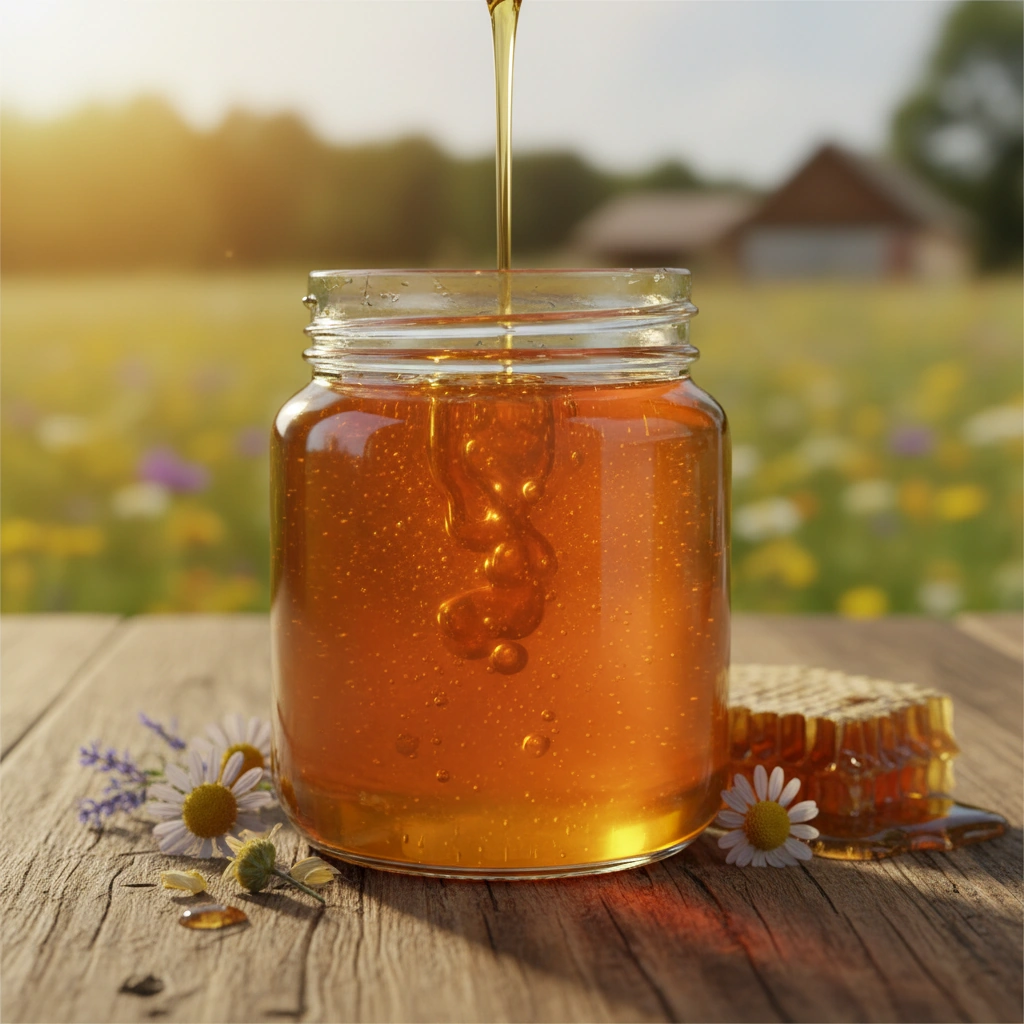
Product Image: For visualization purposes only. All ingredients are supplied as raw materials in bulk form. Available in Nutrient Ingredient form.
Wildflower Honey is a natural, nutrient-rich ingredient derived from diverse floral sources, offering a complex profile of sugars, antioxidants, and enzymes. Revered for its traditional use, it supports immune function, digestive health, and provides soothing benefits, making it an excellent natural sweetener and functional component for supplements.
Wildflower Honey, a natural product derived from the nectar of diverse wild flowering plants, represents a complex botanical matrix. Its unique composition is directly influenced by the varied floral sources available to foraging bees, resulting in distinct profiles in terms of color, flavor, and biochemical constituents. This viscous liquid is primarily composed of simple sugars, predominantly fructose and glucose, along with water. However, its nutritional and functional value extends beyond mere sweetness, encompassing trace amounts of minerals such as potassium and calcium, vitamins (B complex, C), enzymes like glucose oxidase and catalase, amino acids, and a rich array of polyphenolic compounds. For centuries, across numerous cultures, wildflower honey has been revered not only as a natural sweetener and food source but also for its traditional use in various wellness practices, highlighting its deep-rooted historical significance in human health. Its natural origin and complex profile make it a sought-after ingredient in the modern supplement industry.
The health benefits associated with Wildflower Honey are largely attributable to its diverse array of bioactive compounds. Key among these are flavonoids, such as chrysin, pinocembrin, and galangin, alongside various phenolic acids like caffeic acid and p-coumaric acid, which collectively contribute to its potent antioxidant capacity. Research, including studies by Gheldof et al. (2002) published in the Journal of Agricultural and Food Chemistry, has demonstrated honey's significant ability to scavenge free radicals, thereby mitigating oxidative stress within the body. Furthermore, honey exhibits notable antimicrobial properties, primarily due to its high sugar concentration, low pH, and the enzymatic production of hydrogen peroxide by glucose oxidase. Studies have shown its efficacy against a broad spectrum of bacteria, including some antibiotic-resistant strains. Its anti-inflammatory effects are also recognized, likely mediated by its flavonoid content, which can modulate inflammatory pathways. Emerging evidence also points to the prebiotic potential of certain oligosaccharides present in honey, supporting a healthy gut microbiota and digestive function.
In supplement formulations, Wildflower Honey serves as a versatile ingredient, often incorporated into functional foods, beverages, and various nutritional supplements. Its natural sweetness makes it an excellent alternative to refined sugars, enhancing palatability while contributing beneficial compounds. It can be found in liquid supplements, tinctures, chewable forms like gummies, or even spray-dried into powders for blends. When selecting Wildflower Honey for formulation, quality considerations are paramount, including purity (ensuring no adulteration with corn syrups or other sweeteners), the specific floral and geographical origin, and processing methods. Raw, minimally processed honey often retains higher levels of heat-sensitive enzymes and volatile compounds. Scientific research continues to validate its traditional uses; for instance, randomized controlled trials have indicated honey's effectiveness in alleviating nocturnal cough and improving sleep quality in children with upper respiratory infections, often outperforming conventional remedies (Paul et al., 2007, Archives of Pediatrics & Adolescent Medicine). Its role in supporting respiratory health and modulating immune responses through its complex phytonutrient profile continues to be an active area of investigation, underscoring its potential in evidence-based health products.
Discover more ingredients that complement your selection