In Stock
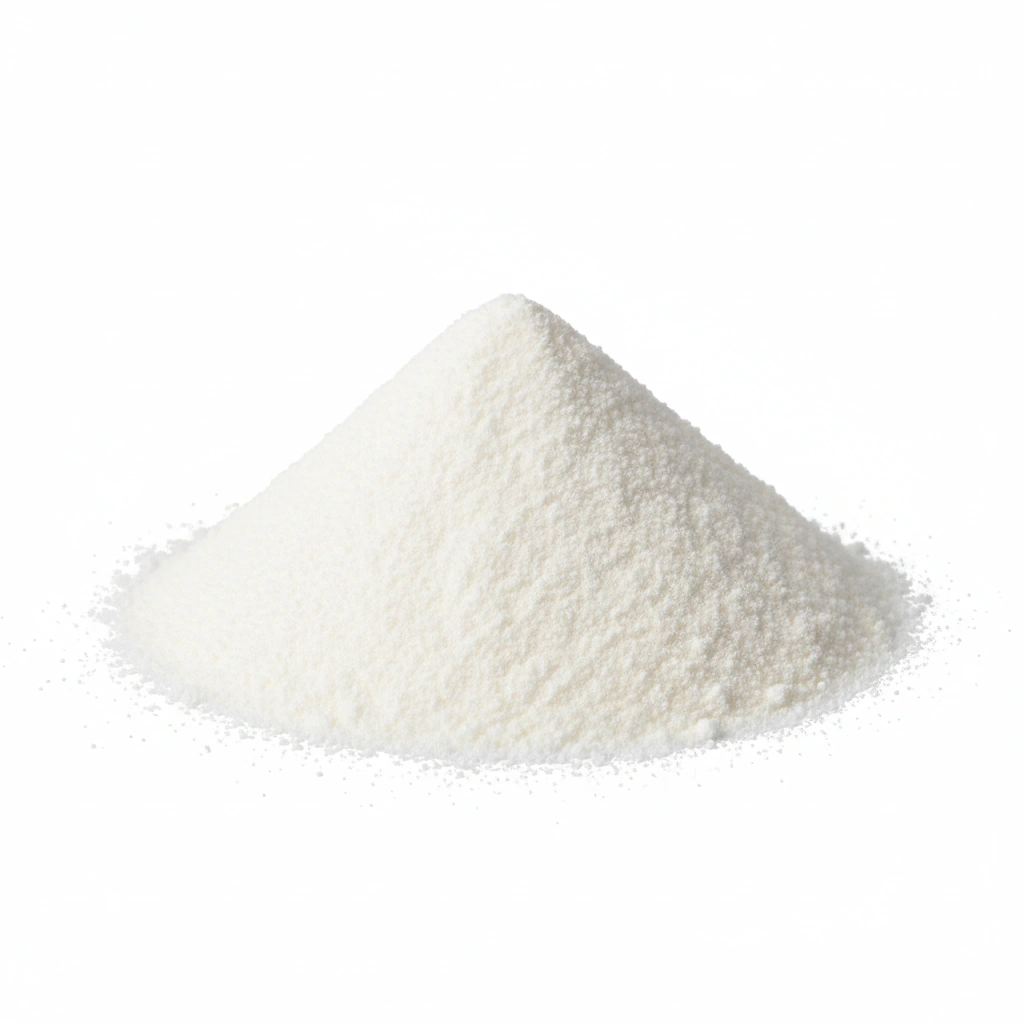
Product Image: For visualization purposes only. All ingredients are supplied as raw materials in bulk form. Available in NON-FOOD Ingredient form.
Povidone K-30 (PVP K-30) is a versatile, synthetic polymer widely used as an excipient in supplement formulations. It functions as an excellent binder for tablets and granules, a film-forming agent for coatings, and a solubilizer for enhancing the bioavailability of poorly soluble compounds, ensuring product integrity and efficacy.
Povidone K-30, chemically known as Polyvinylpyrrolidone (PVP) K-30, is a synthetic, water-soluble polymer derived from the polymerization of N-vinylpyrrolidone. It is characterized by its average molecular weight, with the "K" value (K-value) indicating its viscosity in aqueous solution and, consequently, its average molecular weight. K-30 specifically denotes a K-value of 27-32, corresponding to an average molecular weight of approximately 40,000 daltons. This specific molecular weight range provides an optimal balance of binding efficiency and solubility, making it a versatile excipient in various applications. Its non-ionic nature and biocompatibility contribute to its widespread acceptance in pharmaceutical, nutraceutical, and cosmetic industries. PVP K-30 is typically supplied as a white to off-white, free-flowing powder, odorless or with a faint characteristic odor, and readily dissolves in water, ethanol, methanol, and chloroform, but is insoluble in ether and mineral oil. This broad solubility profile is crucial for its utility in diverse formulation types and processing methods.
As a synthetic polymer, Povidone K-30 does not exert direct pharmacological or nutritional health benefits in the traditional sense, nor does it contain "bioactive compounds" like plant extracts or vitamins. Instead, its "mechanism of action" relates to its functional properties as an excipient. In supplement formulations, PVP K-30 acts primarily as a binder, enhancing the mechanical strength and integrity of tablets and granules by forming a polymeric matrix that holds particles together. Its excellent film-forming properties are utilized in tablet coating, providing a protective layer that can mask taste, improve swallowability, and control release kinetics. Furthermore, PVP K-30 can function as a solubilizer for poorly water-soluble active ingredients, often by forming amorphous solid dispersions or co-precipitates, thereby improving their bioavailability. Research, such as studies published in the *Journal of Pharmaceutical Sciences*, highlights its effectiveness in improving the dissolution rate of hydrophobic drugs, which is directly translatable to enhancing the absorption of certain nutrients or compounds in supplements.
Povidone K-30's applications in nutraceuticals are extensive, ranging from solid dosage forms like tablets and capsules to liquid and topical preparations. In tablet manufacturing, it is frequently employed in both wet granulation and direct compression processes as a dry binder or a granulating fluid component. For capsules, it can serve as a diluent or a flow agent. Its role as a film-forming agent is critical in enteric or sustained-release coatings, which are designed to protect ingredients from gastric acid or provide prolonged release profiles. Quality considerations for PVP K-30 are paramount, focusing on molecular weight distribution, purity, and absence of residual monomers or solvents, all of which are critical for safety and consistent performance. Compliance with pharmacopoeial standards (e.g., USP, EP) ensures its suitability for human consumption. Scientific evidence, including numerous formulation studies and excipient monographs, consistently supports PVP K-30's safety and efficacy as a pharmaceutical and nutraceutical aid, affirming its inertness and stability within various formulations.
Discover more ingredients that complement your selection