In Stock

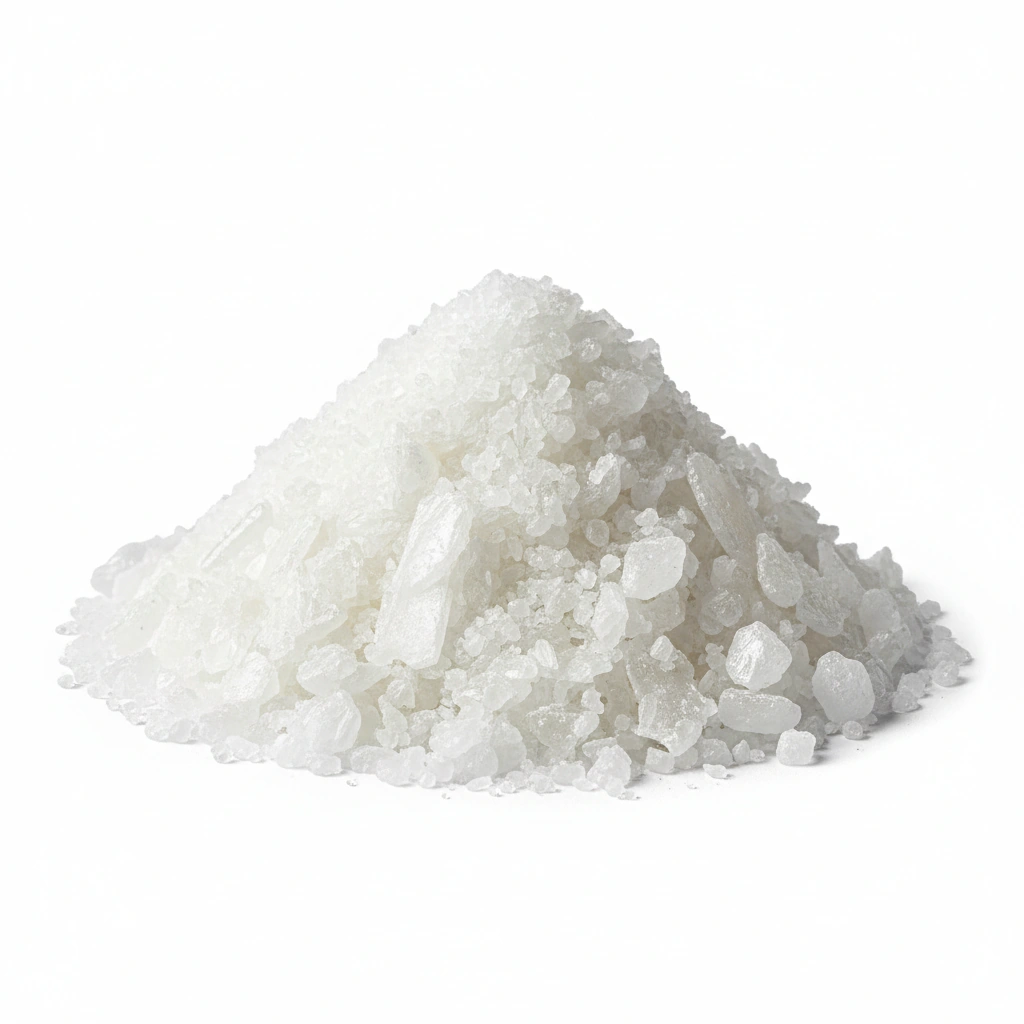
Product Image: For visualization purposes only. All ingredients are supplied as raw materials in bulk form. Available in Ingredients / Powders form.
Stearic acid is an 18-carbon saturated fatty acid widely present in natural fats, often used in supplements as a functional excipient. It is metabolically unique among saturated fats, as research indicates it has a neutral or even beneficial effect on cholesterol levels due to its rapid conversion to oleic acid. This makes it a valuable component for improving manufacturing processes and supporting cellular health without adverse lipid impacts.
Stearic acid is a saturated fatty acid characterized by an 18-carbon chain, ubiquitous in both animal and vegetable fats. It stands as one of the most abundant long-chain fatty acids found in nature, comprising a significant proportion of the fat content in widely consumed foods such as cocoa butter, shea butter, and beef tallow. In its purified form, stearic acid presents as a white, waxy solid, notably insoluble in water. Its distinct physical properties, particularly its relatively high melting point of approximately 69.3 °C, render it exceptionally versatile across diverse industrial, cosmetic, and pharmaceutical applications, including a crucial role within the supplement industry. Historically, it has been recognized for its fundamental involvement in lipid metabolism and the structural integrity of cellular membranes, serving as a pivotal building block for more complex lipids within biological systems. Its natural abundance and inherent stability contribute significantly to its widespread adoption as both an excipient and, in specific contexts, an active component in numerous formulations, valued for its consistent performance and often inert nature.
Contrary to the general perception of saturated fats, scientific research suggests that stearic acid exhibits a neutral or potentially favorable impact on plasma cholesterol levels. Multiple human intervention studies, including those meticulously reviewed and published in esteemed journals like the American Journal of Clinical Nutrition, have consistently demonstrated that dietary stearic acid does not elevate low-density lipoprotein (LDL) cholesterol, often referred to as "bad" cholesterol. In fact, some evidence indicates it may even slightly reduce LDL cholesterol when compared to other saturated fatty acids, such as palmitic acid. This unique metabolic behavior is attributed to stearic acid's rapid desaturation into oleic acid – a monounsaturated fat – by the enzyme stearoyl-CoA desaturase 1 (SCD1) primarily within the liver. This efficient conversion pathway is key to its distinct physiological profile. Beyond its modulatory effects on lipids, stearic acid also contributes to optimal mitochondrial function and cellular energy production, serving as a readily available substrate for beta-oxidation. Furthermore, its presence is integral for maintaining the structural integrity and fluidity of cell membranes, thereby supporting overall cellular health and function.
Within supplement formulations, stearic acid's primary utility lies in its role as a versatile excipient. It functions effectively as a lubricant, binder, and anti-caking agent, particularly in the manufacturing of tablets and capsules, thereby significantly enhancing production efficiency and ensuring product consistency. As a tablet lubricant, typically incorporated at concentrations ranging from 0.5% to 5% of the total formulation, it is indispensable in preventing raw ingredients from adhering to compression machinery, facilitating a smooth and continuous manufacturing process. From a broader nutritional science perspective, while not typically marketed for direct "health benefits" in the manner of vitamins or minerals, its unique metabolic profile is a critical consideration in the development of fat-based or lipid-containing supplement matrices. Ongoing research continues to explore its potential, including its influence on satiety signaling and energy expenditure, as well as its interaction with other dietary components. Critical quality considerations for stearic acid include stringent purity standards, ensuring compliance with international pharmacopoeial specifications (e.g., USP, EP) for pharmaceutical excipients. Furthermore, verified sourcing is paramount, allowing manufacturers to distinguish between animal-derived and vegetable-derived stearic acid, which is crucial for meeting specific dietary requirements such as vegan or vegetarian product lines.
Discover more ingredients that complement your selection